-
Affiliate Disclosure: This article contains affiliate links. If you purchase through these links we may earn a small commission at no extra cost to you. As an Amazon Associate we earn from qualifying purchases. This article also contains links to Argendon dehumidifier products — use code CHPR3 at argendon.com for 3% off your order. ⚡…
-
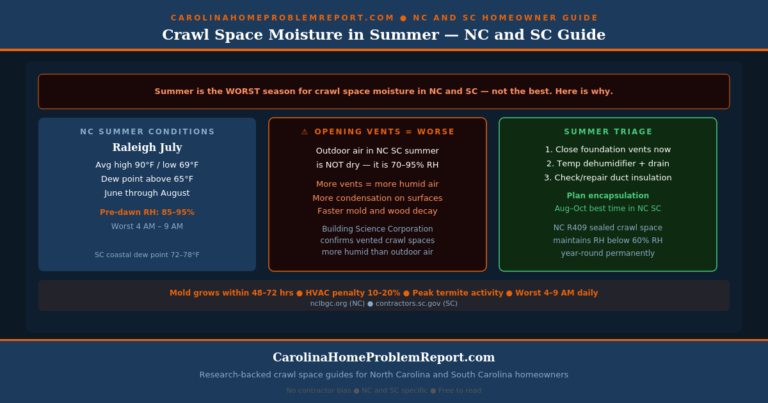
Crawl Space Moisture Problems in Summer: Why NC and SC Humidity Makes It the Worst Season of the Year
Affiliate Disclosure: This article contains affiliate links. If you purchase through these links we may earn a small commission at no extra cost to you. As an Amazon Associate we earn from qualifying purchases. This article also contains links to Argendon dehumidifier products — use code CHPR3 at argendon.com for 3% off your order. ⚡…
-
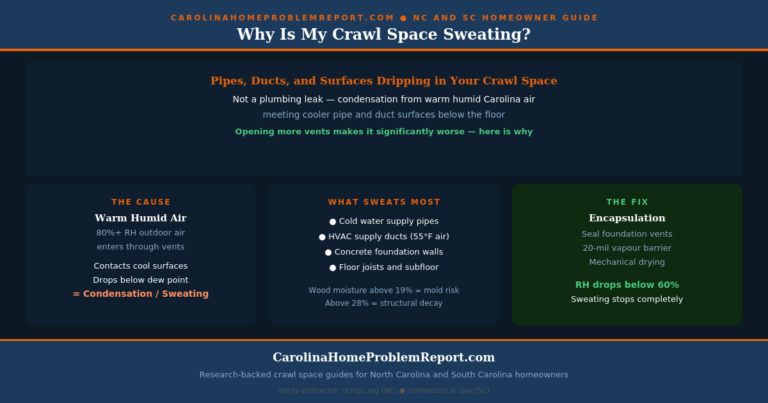
Why Is My Crawl Space Sweating? Pipes, Ducts, and Surfaces Explained for NC and SC Homeowners
Affiliate Disclosure: This article contains affiliate links. If you purchase through these links we may earn a small commission at no extra cost to you. As an Amazon Associate we earn from qualifying purchases. This article also contains links to Argendon dehumidifier products — use code CHPR3 at argendon.com for 3% off your order. ⚡…
-
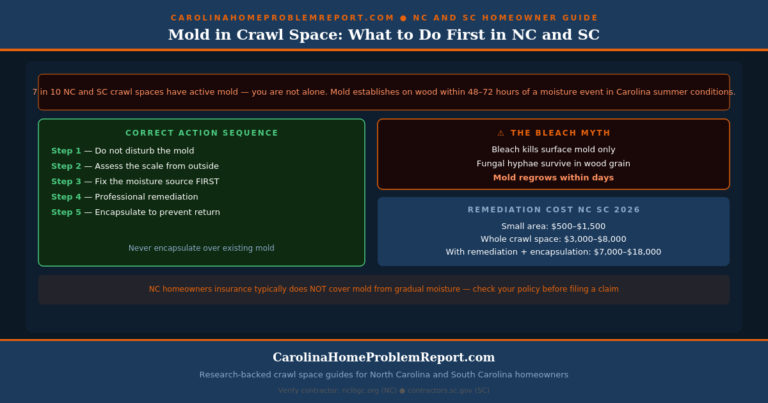
Mold in Crawl Space: What to Do First — The Correct Action Sequence for NC and SC Homeowners
⚡ QUICK ANSWERIf you have found mold in your crawl space, the correct sequence is: stop panicking, identify the scale of the problem, fix the moisture source that caused it, then remediate — in that exact order. Do not encapsulate over mold. Do not apply bleach to wood surfaces. In NC and SC, crawl space…
-
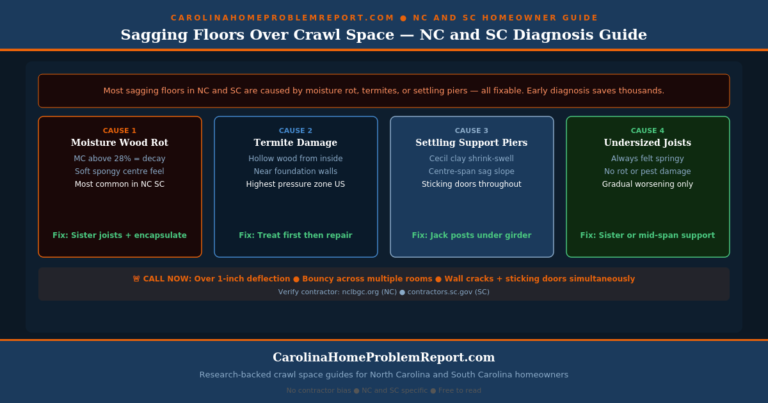
Sagging Floors Over Crawl Space: The 4 Causes, When It Is an Emergency, and Repair Costs for NC and SC Homeowners
⚡ QUICK ANSWERSagging floors over a crawl space in NC and SC are almost always caused by one of four things — moisture-driven wood rot, termite damage, settling support piers, or inadequate original construction. All four are fixable. The urgent question is which one applies and how far the damage has progressed. A floor that…
-
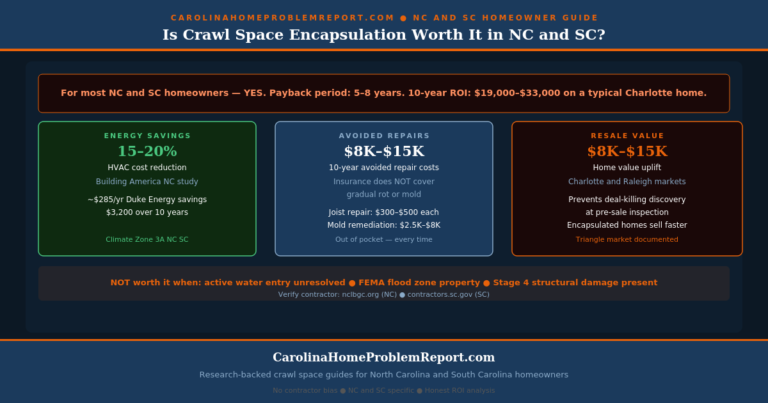
Is Crawl Space Encapsulation Worth It in NC and SC? The Complete ROI Analysis
⚡ QUICK ANSWERFor most NC and SC homeowners, crawl space encapsulation is worth it — the combination of 15–20% HVAC energy savings, $8,000–$15,000 in avoided repair costs over a 10-year period, and documented resale value uplift in the Charlotte and Raleigh markets produces a payback period of 5–8 years on a typical project. There are…
-
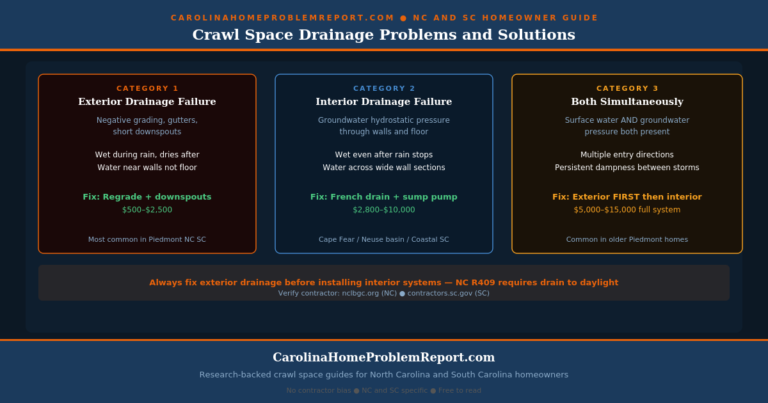
Crawl Space Drainage Problems and Solutions: The 3-Category Diagnosis Framework for NC and SC Homeowners
⚡ QUICK ANSWERCrawl space drainage problems fall into three categories — exterior drainage failure, interior drainage failure, and both simultaneously. The correct fix depends on which category applies. Exterior problems must always be addressed before installing any interior drainage system. Installing a sump pump without fixing exterior drainage first means managing water that should never…
-
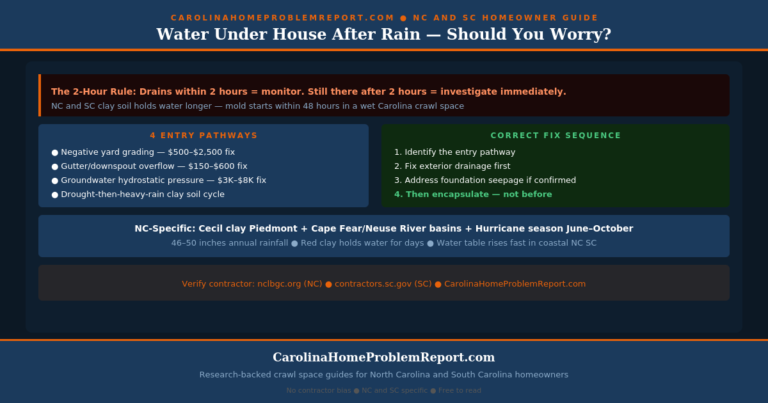
Water Under House After Rain: Should You Worry? The 4 Entry Pathways NC and SC Homeowners Need to Know
⚡ QUICK ANSWERA small amount of surface moisture that drains within 1–2 hours after heavy rain is within normal range. Standing water that persists beyond 2 hours, returns after every moderate rain, or covers more than a small area is a drainage problem that needs to be identified and fixed. Left unaddressed, persistent water under…
-
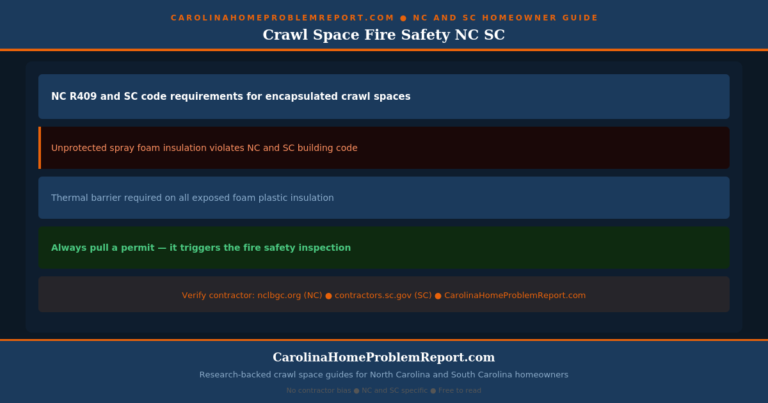
Crawl Space Fire Safety NC SC — Building Code Requirements for Foam Insulation, Vapour Barriers, and Combustion Appliances
⚡ QUICK ANSWER NC R409 and SC building codes both require that foam plastic insulation in crawl spaces be covered with a thermal barrier — typically 1/2-inch gypsum board — unless the foam has been specifically tested and approved for exposed application. Vapour barriers must meet flame spread and smoke development requirements. Unprotected spray foam…
-
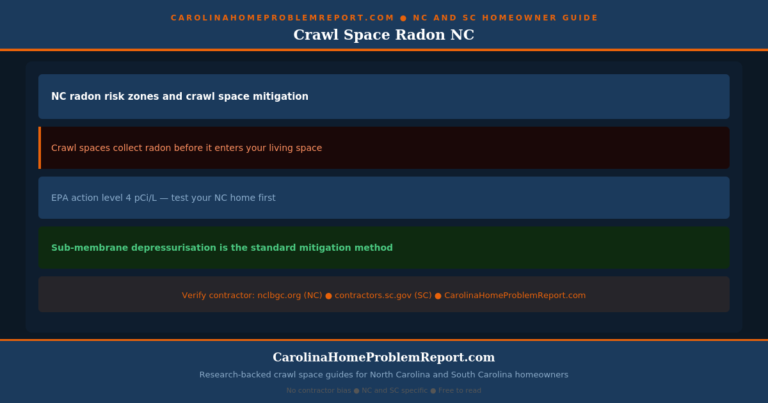
Crawl Space Radon NC — North Carolina Radon Risk Zones, How Crawl Spaces Increase Exposure, and Mitigation Options
⚡ QUICK ANSWER Radon is a radioactive gas that forms naturally from uranium decay in soil and rock. Crawl space homes provide a large, enclosed entry zone directly below the floor. NC has significant radon risk zones, particularly in the western mountains and Piedmont regions. The EPA action level is 4 pCi/L. Test your home…