Crawl Space Drainage Problems and Solutions: The 3-Category Diagnosis Framework for NC and SC Homeowners
⚡ QUICK ANSWERCrawl space drainage problems fall into three categories — exterior drainage failure, interior drainage failure, and both simultaneously. The correct fix depends on which category applies. Exterior problems must always be addressed before installing any interior drainage system. Installing a sump pump without fixing exterior drainage first means managing water that should never have entered. NC R409 requires all sealed crawl spaces to have drainage that routes to daylight or a sump — drainage is a code requirement, not an optional upgrade.
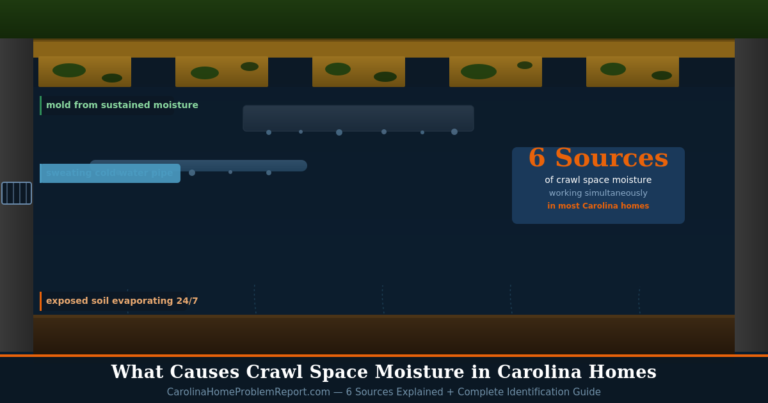
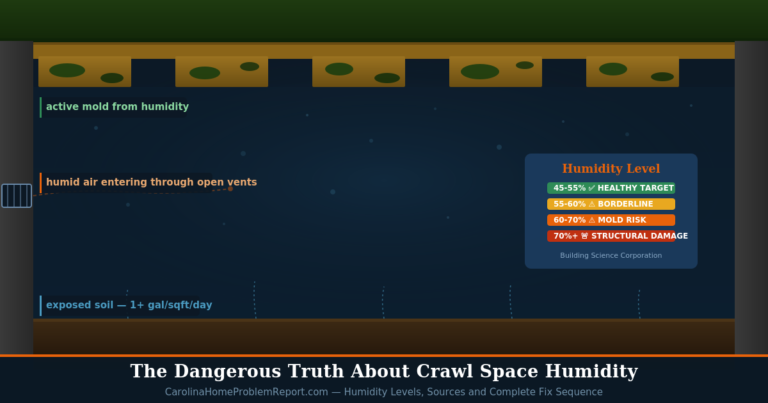
Crawl space drainage problems are the root cause behind most of the moisture damage, mold, and structural deterioration that Carolina homeowners discover under their floors. When water has no reliable path away from the crawl space — whether from surface runoff, groundwater pressure, or rainfall accumulation — it sits, evaporates, and raises humidity to the point where wood rot and mold become inevitable. In NC and SC, where the combination of red Piedmont clay soil, high annual rainfall, and a shallow water table in coastal areas creates persistent drainage pressure, poor crawl space drainage is an ongoing structural risk that compounds with every rain event.
Signs Your Crawl Space Drainage Is Failing
Signs visible from inside the home: musty or earthy smell on the ground floor, cold damp floors in winter, soft or spongy areas in flooring (wood moisture above 19% causes structural softening), sticking doors or windows, higher than expected energy bills.
Signs visible in the crawl space: standing water or muddy soil, white or grey mineral staining (efflorescence) on foundation walls, wet or sagging insulation batts, dark staining on floor joists and sill plates, visible mold on wood surfaces, rust on metal components, displacement or tenting of the vapour barrier.
Signs visible outside the home: soil pooling against the foundation after rain, overflowing gutters in rain, short downspouts terminating within 2 feet of the foundation, eroded soil directly below roof edges, mulch beds built up against the siding.
The 3-Category Drainage Diagnosis Framework
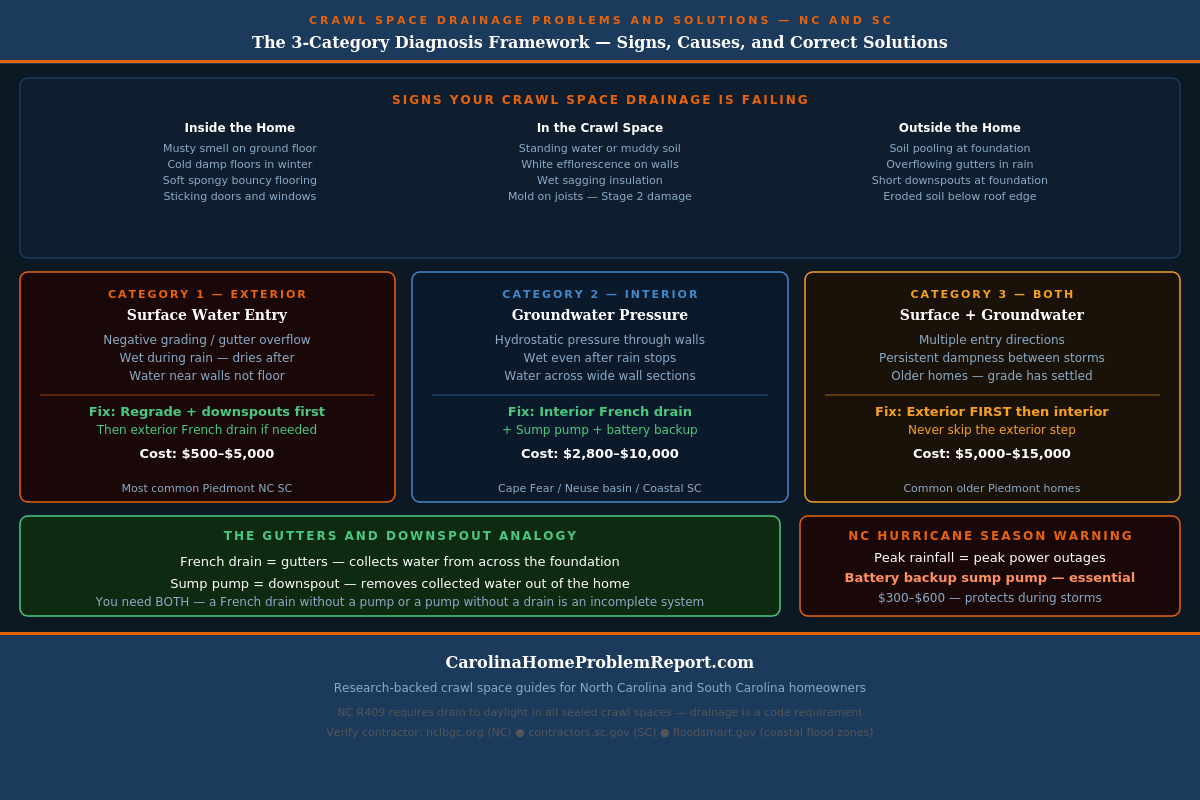
Category 1 — Exterior drainage failure only. Surface water is reaching the foundation through negative yard grading, gutter overflow, or short downspouts. Diagnostic signature: crawl space gets wet during heavy rain but dries out reasonably quickly afterward; water appears close to foundation walls rather than rising from the floor. This is the most common category for Piedmont NC homes on properly elevated lots. The fix is entirely exterior — regrading, gutter cleaning, downspout extension.
Category 2 — Interior drainage failure only. The exterior drainage is adequate but groundwater hydrostatic pressure pushes water through the foundation walls, footer joints, or crawl space floor from below. Diagnostic signature: crawl space gets wet even after rain has stopped; water appears across large sections of foundation wall; problem is worse after prolonged rain periods. This is most common near the Neuse River basin around Raleigh and Clayton, the Cape Fear River basin around Fayetteville and Wilmington, and coastal SC low-country areas. The fix is interior — a perimeter French drain system with sump pump.
Category 3 — Both exterior and interior drainage failure. Surface water entry and groundwater pressure are both contributing. Common in older NC homes where original grading has deteriorated over decades. Diagnostic signature: water appears from multiple directions, crawl space gets wet during rain AND has persistent dampness between storms. The fix requires both exterior grading correction AND interior drainage. The exterior work must be completed first.
Why NC and SC Clay Soil Makes Drainage Harder
The Cecil clay series that dominates the NC and SC Piedmont has extremely low permeability compared to sandy or loam soils. Where sandy coastal plain soils can absorb 1–2 inches of rainfall per hour, saturated Cecil clay absorbs less than 0.2 inches per hour. In a heavy NC thunderstorm delivering 2–3 inches of rain in 2 hours — common during summer convective storms and tropical systems — the soil around a Piedmont foundation is effectively impermeable. The drainage system serving a Piedmont home must handle a significantly higher volume than a comparable home on sandy coastal soil.
Exterior Drainage Solutions — Fix These First
Yard regrading. The IRC requires a minimum 6-inch fall in the first 10 feet away from the foundation. Any area where soil or mulch has built up against the foundation needs regrading. This is the cheapest and most impactful drainage fix available. Cost in NC and SC: $500–$2,500.
Gutter and downspout maintenance. Clean gutters twice per year. Add downspout extensions routing water a minimum of 6 feet from the foundation. Cost: $150–$600.
Exterior French drain. A trench filled with gravel and perforated pipe installed around the foundation exterior to intercept surface and shallow subsurface water before it reaches the footing. Cost in NC and SC: $1,500–$5,000.
Interior Drainage Solutions — When Exterior Is Not Enough
💡 THE GUTTERS AND DOWNSPOUT ANALOGY: French drain = gutters — collects water from across the foundation and channels it to one exit point. Sump pump = downspout — removes the collected water out of the home through a discharge pipe. You need both. A French drain without a sump pump, or a sump pump without a French drain, is an incomplete system.
Interior perimeter French drain. A trench excavated around the perimeter of the crawl space at footing level, perforated drainage pipe installed at a continuous negative slope, routing collected groundwater to a sump basin. Cost in NC and SC: $2,000–$8,000.
Sump pump. A properly sized sump pump for a NC crawl space should have a minimum capacity of 1/3 horsepower for standard lots and 1/2 horsepower for low-lying or flood-prone areas. Cost including installation in NC: $800–$2,000.
Battery backup sump pump — essential in NC and SC. NC hurricane season produces the most intense rainfall of the year precisely when power outages are most likely. A sump pump that loses power during a storm event is a crawl space that will flood. A battery backup unit costs $300–$600 and is the single most important upgrade for any NC or SC home with an interior drainage system.
NC R409 and the Drain to Daylight Requirement
North Carolina R409 requires that all water entry into a sealed crawl space be managed through drainage that routes to daylight or a sump pump. A sealed crawl space without adequate drainage is non-compliant with NC R409 and will fail a building department inspection. This is one of the most important reasons to pull a building permit for any sealed crawl space conversion in NC. See our NC and SC Crawl Space Building Code Guide for the full R409 requirements.
Cost Summary — Crawl Space Drainage Solutions NC and SC
| Solution | Category | Cost Range NC SC |
|---|---|---|
| Regrade yard and extend downspouts | Exterior | $500–$2,500 |
| Exterior French drain | Exterior | $1,500–$5,000 |
| Interior perimeter French drain | Interior | $2,000–$8,000 |
| Sump pump installation | Interior | $800–$2,000 |
| Battery backup sump pump | Interior add-on | $300–$600 |
| Complete drainage + encapsulation | Full system | $5,000–$15,000 |
Related Guides
- Water Under House After Rain — Should You Worry?
- Standing Water in Crawl Space — Step by Step
- What Causes Crawl Space Moisture?
- Crawl Space Encapsulation Cost NC SC
- NC and SC Crawl Space Building Code
- How to Dry Out a Crawl Space
- Complete Crawl Space Guide — NC and SC
Carolina Home Problem Report provides general educational information for NC and SC homeowners. We are not licensed contractors. Check flood zone status at floodsmart.gov before any coastal property drainage work. Verify contractor licences at nclbgc.org (NC) or contractors.sc.gov (SC). See our Disclaimer.