Hidden Mold Signs: The 7 Clues Most Homeowners Miss
Most hidden mold signs have nothing to do with smell. Bubbling paint, a baseboard that's gone slightly soft, a water stain that keeps reappearing after you paint over it, or allergy symptoms that ease up the moment you leave the house are all real, physical evidence — often showing up well before any odor does.
Waiting for a musty smell before you start investigating means you're already missing the earlier, quieter signs.
⭐ Key Takeaways
- ✓Bubbling or peeling paint, a stain that reappears after cleaning, and a slightly soft baseboard are physical signs that often show up before any smell does
- ✓Allergy or respiratory symptoms that consistently ease up within an hour or two of leaving the house are a genuine pattern worth tracking, not a coincidence to dismiss
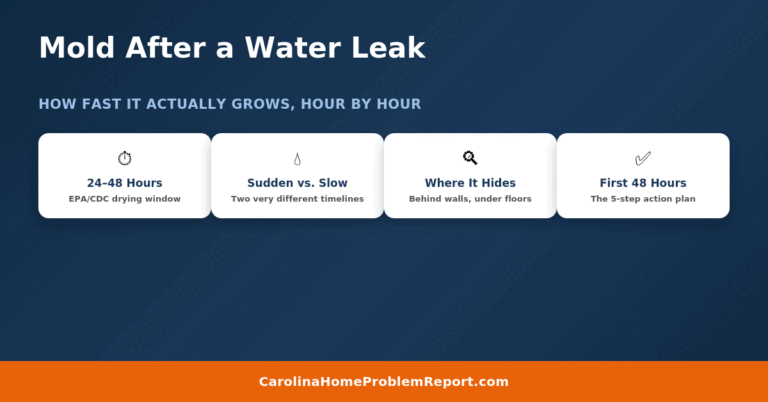
- ✓A past water leak, flood, or appliance overflow that wasn't professionally dried within 24–48 hours is one of the single strongest predictors of hidden mold, even years later
- ✓Each sign tends to point toward a specific likely location — this guide maps every sign to where to look first
- ✓The EPA's own guidance is that if you can see or confirm mold, you don't need a lab test to know it needs addressing — testing is for confirming suspected-but-unconfirmed cases
Most guides to spotting hidden mold lead with "a musty smell" as sign number one. That's genuinely useful, but it's also the sign everyone already knows to look for — and it means a lot of other, earlier physical evidence gets skipped over entirely while people wait for a smell that may never show up strongly.
This guide deliberately focuses on the signs that don't involve smell at all — the physical, visual, and health-pattern clues that often appear first, and that most homeowners either dismiss individually or never connect to each other.
If you've already noticed a musty or earthy smell and are trying to figure out where it's coming from, our Mold Smell But No Visible Mold guide walks through a full room-by-room detection process built specifically around that scenario.
In This Article
7 Hidden Mold Signs That Have Nothing to Do With Smell
Any one of these on its own is worth a closer look. Two or more together is a strong signal something is actively growing somewhere you can't yet see.
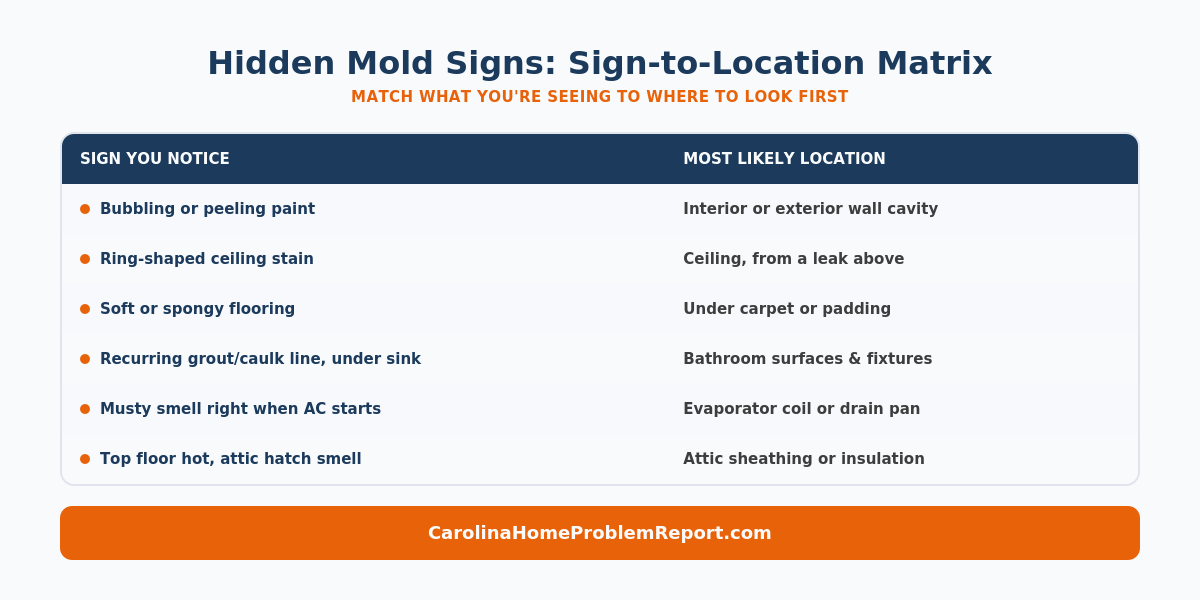
Hidden Mold Signs: Where Each One Points
Once you've spotted one of the signs above, the next useful step is narrowing down where to actually look. Each of these signs tends to correlate with a specific location more than others.
| Sign | Most Likely Location | Full Guide |
|---|---|---|
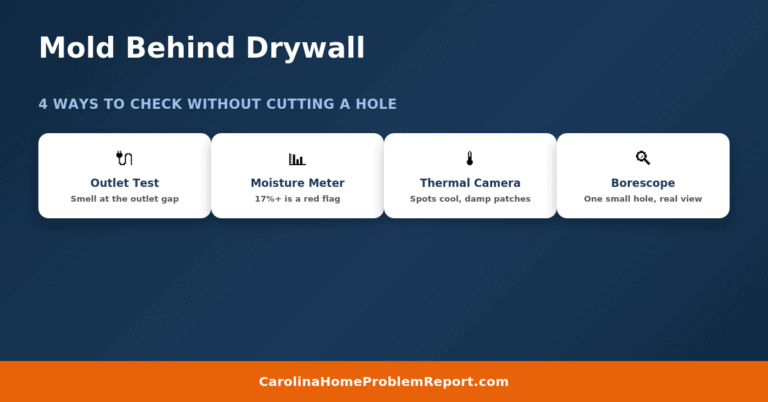
| Bubbling paint, wall stain | Interior or exterior wall cavity | Mold Behind Drywall |
| Ceiling stain, ring-shaped mark | Ceiling, from a leak or condensation above | Mold on Ceiling |
| Soft or spongy flooring | Under carpet or padding | Mold Under Carpet |
| Returns in grout/caulk, under sink | Bathroom surfaces and fixtures | Bathroom Mold |
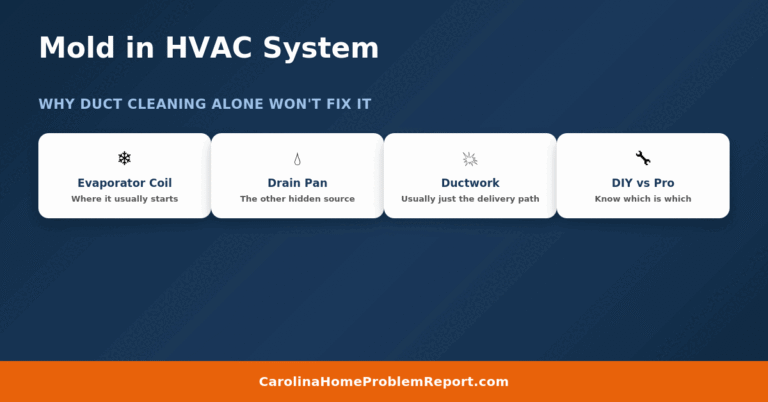
| Musty smell right when AC starts | Evaporator coil or condensate drain pan | Mold in HVAC System |
| Heat/humidity trapped in top floor, attic hatch smell | Attic sheathing or insulation | Mold in Attic |
The Health Symptom Pattern Worth Tracking
Symptoms alone are never proof of mold — plenty of things cause sneezing and congestion. What makes a pattern worth paying attention to is consistency tied specifically to the home.
A genuinely useful way to track this: for two weeks, note whether symptoms are present each morning at home, and whether they ease up within a few hours of being somewhere else (work, a friend's house, running errands). A consistent pattern — worse at home, better away — is meaningfully different from random day-to-day variation.
If more than one person in the household notices a similar pattern independently, that's a stronger signal than one person's symptoms alone, since it rules out an individual-specific cause like a seasonal allergy that only affects one person.
Hidden Mold Signs in NC & SC: Why They Show Up More
North and South Carolina's long, humid summers push average relative humidity to 70–90% across much of the region — well above the roughly 60% threshold that gives mold a meaningful head start, and sustained for months at a time rather than a brief seasonal spike.
That baseline humidity means these seven signs tend to show up faster here, and in more places at once, than in a drier or shorter-summer climate. A slow leak that might take a full year to produce visible bubbling paint elsewhere can show real signs within a few months in a Carolina summer.
It's also worth knowing that Carolina construction common in older housing stock — crawl space foundations, HVAC ductwork run through hot attics, brick veneer or vinyl siding over a drainage gap — creates more of the specific conditions these signs point back to than typical construction in milder regions.
What NOT to Do: Waiting for "Proof"
Don't wait for visible mold before acting on the signs above. By the time mold is visibly growing on a surface, it's typically been developing in that spot, unseen, for weeks already. Treating the physical and health signs as early warnings — not as something to dismiss until you can literally see it — catches the problem earlier and usually means a smaller, cheaper fix.
Don't assume "no smell" means "no mold." Not every mold colony produces a noticeable odor, especially early on or in a well-ventilated space. Several of the signs above routinely show up with zero detectable smell at all.
Don't repaint or re-cover a recurring stain without investigating first. Painting over a stain that's already come back once treats the symptom, not the cause — the stain is a message about what's happening underneath, and covering it again just delays finding out.
Do You Need to Test, or Just Investigate?
✅ Investigate first (no test needed) if:
- You can identify a likely location using the reference table above
- You're able to safely access and look at that specific spot yourself
- No household member has a serious respiratory condition
⚠️ Consider testing or a professional inspection if:
- Multiple signs are present but you can't pinpoint or access a likely location
- You're selling or buying the home and need documented confirmation
- A household member has asthma, allergies, or another respiratory sensitivity
The EPA's own position is useful here: if you can see or otherwise confirm mold, you generally don't need a lab test to tell you it needs to be addressed — testing is most useful for confirming a suspected-but-unconfirmed case, or for documentation purposes, not as a required first step before any action.
Frequently Asked Questions
Can hidden mold make you sick even without a smell?
Yes. Both mold spores and the volatile organic compounds mold releases as it grows can affect sensitive people, and growth in a well-ventilated or enclosed cavity doesn't always produce a smell strong enough to notice consciously.
How long does it take for hidden mold to become a serious problem?
Mold can begin growing within 24–48 hours of sustained water exposure, but "serious" is relative — a small, contained spot found early is a minor fix, while the same spot left for months or years to spread through a wall cavity or subfloor becomes a meaningfully larger remediation job.
Is a home mold test kit worth buying to confirm hidden mold?
A consumer air-sampling kit can confirm elevated mold spore counts in the air, but it won't tell you where the mold actually is — for that, you still need the kind of physical investigation this guide and its linked location-specific guides walk through.
Should I be worried about one single sign, or only multiple signs together?
A single sign is worth a quick look, not panic — several of these signs have other, non-mold explanations on their own. Two or more signs together, especially a physical sign (like bubbling paint) alongside a health or past-water-event clue, is when it's genuinely worth a closer, more deliberate investigation.
Key Facts About Hidden Mold Signs in Carolina Homes:
- Bubbling paint, a recurring stain, a soft baseboard, and persistent condensation are all real signs that show up before any smell does.
- Allergy symptoms that consistently ease up away from home are a genuine pattern worth tracking over two weeks.
- A past water event that wasn't professionally dried out is one of the strongest predictors of hidden mold, even years later.
- NC and SC's 70–90% summer humidity means these signs tend to show up faster and in more places than in a drier climate.
- If you can see or confirm mold, the EPA says you generally don't need a lab test before addressing it.
Once you've narrowed down a likely location, see our specific guides: Mold Behind Drywall, Mold on Ceiling, Mold Under Carpet, Mold in Attic, Bathroom Mold, and Mold in HVAC System — or try the Mold Risk Calculator to gauge your overall risk level.
The Carolina Home Problem Report editorial team researches and writes guides for homeowners across North and South Carolina.
Our research draws on EPA mold guidance, NC State Climate Office data, and insights from licensed Carolina mold assessors and home inspectors. We are not contractors or mold assessors — we are a research team dedicated to giving Carolina homeowners clear, locally specific, unbiased answers.
Carolina Home Problem Report is an informational resource for homeowners. We are not licensed contractors or mold assessors. Always consult a qualified professional before making home repair decisions. See our Disclaimer and Affiliate Disclosure.