Mold After a Water Leak: How Fast Does It Grow?
Mold after a water leak can start growing in as little as 24–48 hours, but that one number hides the part that actually matters: a sudden leak you catch and dry out fast often never grows mold at all, while a slow, hidden leak behind a wall or under flooring can run for months before you even notice — by which point it's long since crossed that window.
Which kind of leak you had changes everything about how worried you should be, and what to actually check.
⭐ Key Takeaways
- ✓The EPA and CDC both point to a 24–48 hour window: dry wet materials fully within that window and mold risk drops sharply
- ✓A sudden leak (burst pipe, washing machine hose) and a slow hidden leak (dripping under-sink pipe, roof seep) follow completely different mold timelines — treating them the same is the most common mistake
- ✓Drying what you can see doesn't mean the leak is handled — mold after a water leak most often establishes itself in cavities you never looked inside
- ✓A clear 5-step action plan for the first 48 hours makes the real difference between a non-event and a remediation job
- ✓NC and SC's high summer humidity shortens the safe-drying window compared to drier climates
"How fast does mold grow" is usually asked as if there's one universal answer. There isn't — not really. The honest answer depends almost entirely on what kind of leak you're dealing with: a one-time, sudden event you noticed and responded to right away, or a slow, ongoing leak that was quietly wetting the same spot for weeks or months before anyone knew it was there.
This guide walks through the real hour-by-hour timeline, why that timeline plays out so differently depending on leak type, where mold actually ends up hiding even after the visible water is gone, and exactly what to do in the first 48 hours to keep a leak from turning into a much bigger problem.
If you're specifically trying to figure out whether a leak you already had has caused mold, our Signs of Hidden Mold guide and Mold Smell But No Visible Mold guide both pick up from here.
In This Article
- Mold After a Water Leak: The Hour-by-Hour Timeline
- Sudden Leak vs. Slow Leak: Why Mold After a Water Leak Isn't One Timeline
- Where Mold Hides After a Water Leak (Even When You Dried It)
- What to Do in the First 48 Hours After a Water Leak
- Signs the Leak Already Caused Mold
- Mold After a Water Leak in NC & SC Homes
- What NOT to Do After a Water Leak
- Frequently Asked Questions
Mold After a Water Leak: The Hour-by-Hour Timeline
The EPA's guidance is specific: mold can begin colonizing a damp surface within 24 to 48 hours under typical indoor conditions. The CDC backs the same window for post-flood and post-leak drying.

Here's what that window actually looks like once a surface is wet:
Three things actually drive this timeline: moisture (the only variable you can control after the fact), a food source (nearly always present — paper-faced drywall, wood, dust, carpet backing), and temperature in the normal indoor comfort range. Spores themselves can't realistically be eliminated from a home's air, so moisture is where the entire fight happens.
Sudden Leak vs. Slow Leak: Why Mold After a Water Leak Isn't One Timeline
The 24–48 hour window above assumes you already know a leak happened. That's true for a sudden leak. It's almost never true for a slow one — and that difference matters more than any other factor in this guide.
💧 Sudden Leak (burst pipe, washing machine hose, water heater failure)
- You know the exact moment it happened
- You can start drying within hours
- The 24–48 hour window is genuinely in your favor
- Caught and dried fast, mold often never establishes at all
🐌 Slow Hidden Leak (dripping supply line, roof seep, slow toilet base leak)
- You don't know it's happening while it happens
- The 24–48 hour window has already closed, repeatedly, before detection
- Material stays damp continuously instead of wet-then-dry
- By the time it's found, mold is usually already established — the question shifts from "will it grow" to "how far has it spread"
A slow leak behind a wall or under a cabinet rarely announces itself the way a burst pipe does. It's discovered through a water bill that creeps up, a faint musty smell, or a cabinet floor that's gone soft — small, easy-to-miss clues rather than a flood.
That's exactly why "how fast does mold grow" gets a different real-world answer depending on which kind of leak you're actually dealing with.
Where Mold Hides After a Water Leak (Even When You Dried It)
Drying the visible, surface-level water after a leak feels like the job is done. Often it isn't, because water damage travels further than it looks, into spaces fans and towels never reach.
| Leak Location | Where It Actually Hides | Full Guide |
|---|---|---|
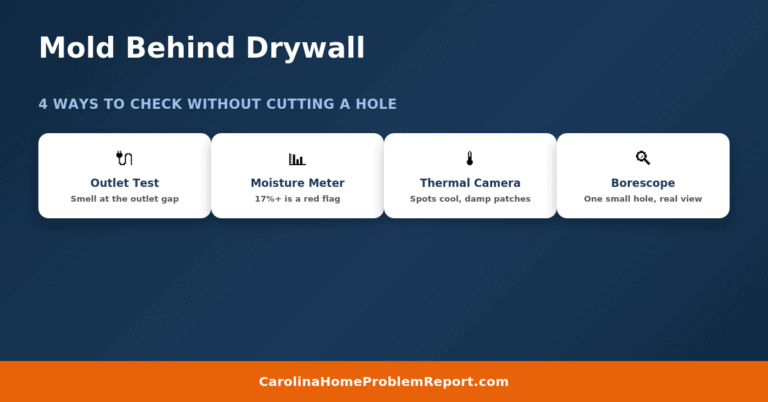
| Wall-mounted leak (pipe, window) | Inside the wall cavity, behind the drywall paper | Mold Behind Drywall |
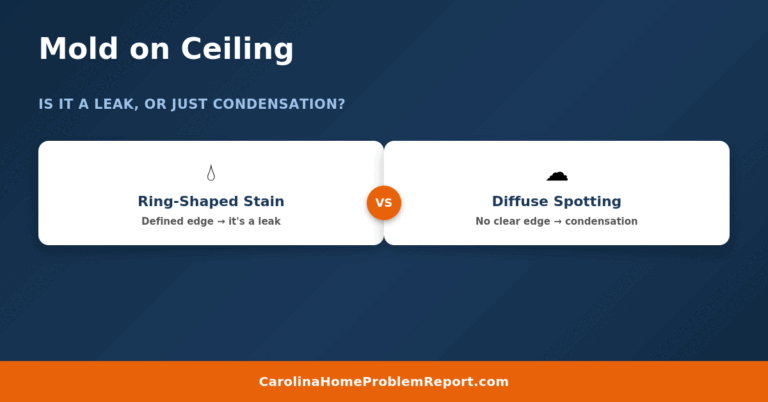
| Roof or upstairs leak | Ceiling cavity and insulation above | Mold on Ceiling |
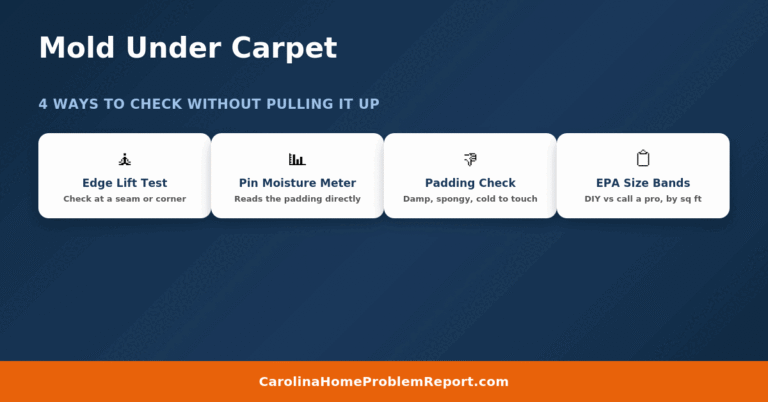
| Appliance overflow onto flooring | Under the carpet, in the padding and subfloor | Mold Under Carpet |
| Toilet, sink, or supply line leak | Under the cabinet base, behind tile, around the wax ring | Bathroom Mold |
The pattern across all four: the surface dries fast because it's exposed to air, while the material right behind or beneath it stays damp for far longer — exactly the kind of environment that carries past the 24–48 hour window even after everything looks dry to the eye.
What to Do in the First 48 Hours After a Water Leak
This is the sequence that actually matters for a sudden leak, and the sequence to start the moment a slow leak is discovered, no matter how long it had already been running.
Signs the Leak Already Caused Mold
If the leak happened a while ago and you're now wondering whether it already turned into a mold problem, a musty smell with nothing visible is one of the clearest signals — our Mold Smell But No Visible Mold guide walks through a full room-by-room process for tracking that down.
No smell yet doesn't mean you're clear, either. Bubbling paint, a baseboard that's gone soft, a stain that keeps reappearing, and several other non-smell signs often show up first — our Signs of Hidden Mold guide maps each one to where it likely points.
Mold After a Water Leak in NC & SC Homes
North Carolina State Extension's housing research identifies the same core moisture sources behind most household mold cases here: burst or leaking pipes, roof leaks, window leaks, and appliance failures, on top of a baseline indoor humidity level that's already working against you.
NC and SC summers routinely push indoor relative humidity to 70–90% without any leak at all. That matters because the drying step after a leak is fighting against air that's already close to saturated — a dehumidifier or fan that would dry a space out in a drier climate's summer may need meaningfully longer here to get the same result.
Older Carolina housing stock also adds risk factors specific to the region: crawl space foundations that stay damp for months, HVAC ductwork run through hot, humid attics, and brick veneer or vinyl siding over a drainage gap that can trap a slow leak against sheathing for a long time before it's found.
What NOT to Do After a Water Leak
Don't stop at "it feels dry." Touch is a poor test for the material underneath a wet surface. A moisture meter reading, or a professional drying confirmation, is the only reliable way to know a leak-affected area is actually dry rather than just dry on top.
Don't put furniture, boxes, or flooring back down early. Covering a drying area traps whatever moisture is left and removes the air circulation that was helping it dry, often undoing days of progress.
Don't assume a slow leak you just found is a "fresh" problem. By the time a hidden leak is discovered, it has typically already been running past the 24–48 hour window many times over — plan for an inspection of the surrounding area, not just a quick wipe-down.
Frequently Asked Questions
Can I prevent mold after a water leak if I dry it fast enough?
Often, yes. A sudden leak that's fully dried — including the hidden material behind or beneath the visible surface — within the 24–48 hour window frequently never develops mold at all. Speed and thoroughness both matter; drying fast but only on the surface doesn't count.
How do I know if a leak is still going on versus already fixed?
A rising water bill with no obvious new usage, a damp spot that returns after drying, or a musty smell that doesn't fade are all signs the source hasn't actually been stopped. If any of these are present, confirm the leak is fully fixed, not just that the visible water is gone, before focusing on drying.
Does a small leak really need the same response as a big one?
The steps are the same regardless of size — stop the source, remove water, check what's underneath, dry thoroughly, and confirm dry. A small leak just means each step takes less time and equipment, not that any step can be skipped.
When should I call a professional instead of drying it myself?
Call a water damage or restoration professional if the affected area is larger than roughly 10 square feet, the leak went on for more than a day or two before discovery, the water was from a contaminated source (sewage, flooding), or anyone in the household has a serious respiratory condition.
Key Facts About Mold After a Water Leak in Carolina Homes:
- Mold can begin establishing within 24–48 hours of sustained water exposure, per the EPA and CDC.
- A sudden leak dried fast and fully often never grows mold; a slow hidden leak usually has already crossed that window by the time it's found.
- Mold hides behind drywall, under carpet, under cabinets, and in ceiling cavities — even after the visible surface looks dry.
- A 5-step first-48-hours plan — stop, remove, check underneath, dry thoroughly, confirm with a moisture meter — is the real difference-maker.
- NC and SC's 70–90% summer humidity works against drying efforts, so give it more time and verification than a drier climate would need.
If you already suspect the leak caused mold, see Mold Smell But No Visible Mold or Signs of Hidden Mold to start narrowing down where. For leak-specific locations, see Mold Behind Drywall, Mold on Ceiling, Mold Under Carpet, and Bathroom Mold.
The Carolina Home Problem Report editorial team researches and writes guides for homeowners across North and South Carolina.
Our research draws on EPA and CDC mold guidance, NC State Extension housing research, and insights from licensed Carolina water damage and mold remediation professionals. We are not contractors or mold assessors — we are a research team dedicated to giving Carolina homeowners clear, locally specific, unbiased answers.
Carolina Home Problem Report is an informational resource for homeowners. We are not licensed contractors or mold assessors. Always consult a qualified professional before making home repair decisions. See our Disclaimer and Affiliate Disclosure.