High Indoor Humidity: What It Causes and How to Fix It
Sustained high indoor humidity (above 50–60%) drives mold growth, dust mite populations, warped wood floors and furniture, musty odors, higher pest activity, and higher AC bills as your system works harder without actually removing much moisture. The fix depends on scale: ventilation fixes and a portable unit handle a single humid room, while a whole-home or crawl space dehumidifier is what actually solves it house-wide in a Carolina climate.
⭐ Key Takeaways
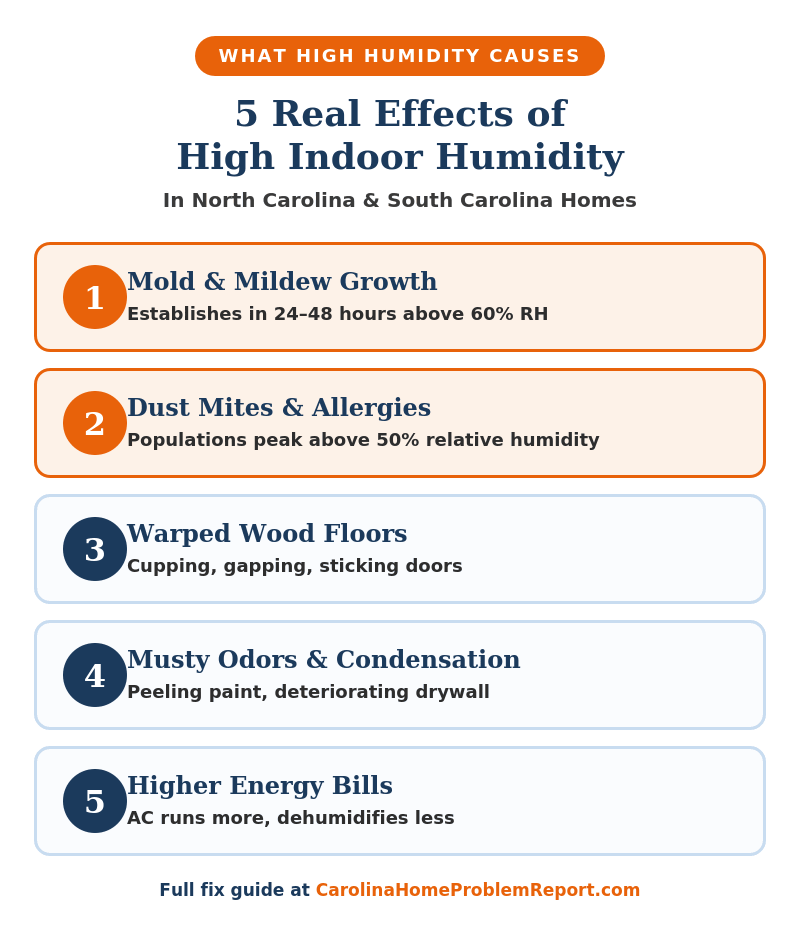
- ✓Mold can establish in 24–48 hours once relative humidity holds above roughly 60% — a Carolina summer keeps many homes there for months without intervention
- ✓Dust mite populations peak above 50% relative humidity — a major and often-missed trigger for year-round indoor allergy symptoms
- ✓Hardwood floors cup and gap as they absorb and release moisture with humidity swings — damage that is often irreversible once it sets in
- ✓A portable dehumidifier fixes one room; it does not solve a whole-house problem coming from the crawl space or the building envelope
- ✓Most fixes below start showing results in days, but structural fixes (crawl space encapsulation) take a season to fully prove out
High humidity isn't just an uncomfortable feeling — left alone, it actively damages your home and can affect your health. Unlike a leak or a broken appliance, humidity damage is slow and easy to dismiss until it shows up as something else: a musty smell, a warped floorboard, a flare-up of allergies that never quite goes away.
This guide focuses on two things: exactly what sustained high humidity does to a home over time, and a practical, ranked path to actually fixing it — from the cheapest same-day step to the fix that solves it for good. If you haven't yet identified why your house runs humid, our guide on crawl space humidity and the causes behind high indoor humidity is the place to start first — this one picks up from there.
In This Article
What High Indoor Humidity Actually Causes
How to Fix It — Ranked by Scale and Cost
Start at the top and work down only as far as your situation actually requires — there's no need to jump straight to the most expensive fix if a cheaper one solves it.
Fix ventilation first — usually free to under $100
Confirm bathroom and kitchen exhaust fans actually vent outdoors (not into the attic), and run them for 20 minutes after cooking or showering. This alone resolves mild, activity-driven humidity in many homes.
Add a portable dehumidifier for one problem room — $150–$300
Effective for a single humid room — a basement, a below-grade bedroom, a sunroom. Sized to the room's square footage. This is a targeted fix, not a whole-house solution.
Have your HVAC system evaluated for sizing and runtime
If the AC is short-cycling (cooling fast, shutting off before dehumidifying), a technician can confirm this and recommend either a dehumidification add-on or, in some cases, adjusting the system rather than replacing it.
If you have a crawl space, check and treat it as the likely whole-house source
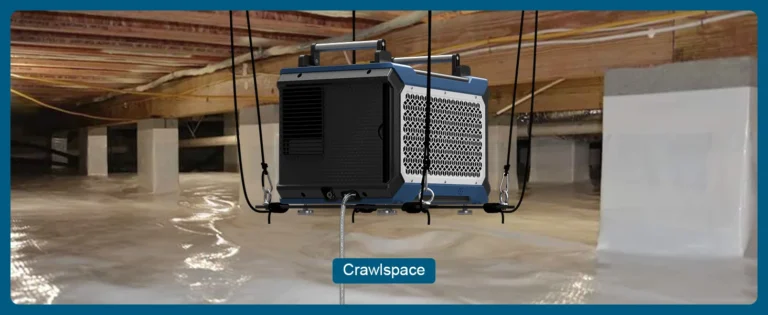
This is the fix most Carolina homeowners skip and the one that most often solves a whole-house humidity problem for good. See our crawl space dehumidifier guide for sizing and product options once you've confirmed the crawl space is contributing.
Full crawl space encapsulation for a permanent, whole-house fix
The most comprehensive fix and the one that stops the problem at its source rather than managing the symptom. Typically $6,000–$12,000 for a full system, but it addresses steps 2 and 4 above permanently rather than needing ongoing management.
A Note on "Whole-Home" Dehumidifier Units
Some homeowners install a dedicated whole-home dehumidifier tied into the ductwork rather than treating the crawl space directly. This can work, but in most Carolina crawl space homes it is treating the same air twice — once at the source (the crawl space) is usually the more cost-effective fix. If your home doesn't have a crawl space, or the crawl space is already handled, a ducted whole-home unit is worth asking an HVAC contractor about directly.
How Long Until You See Results?
Ventilation fixes. Correcting exhaust fan venting and usage habits shows a measurable hygrometer difference within 24 hours in mild cases.
Portable dehumidifier. A correctly sized unit brings a single room's humidity into the target range within a few days of continuous operation.
Crawl space dehumidifier. Whole-house humidity typically stabilizes within one to two weeks of a properly sized crawl space unit running continuously.
Full encapsulation. Wood floor and structural moisture takes a full heating-and-cooling cycle to fully re-equilibrate and confirm the fix held through both extremes.
DIY vs Professional
✅ DIY-appropriate:
- Checking and correcting exhaust fan venting
- Installing and running a portable dehumidifier
- Sealing obvious gaps around windows and doors
- Testing humidity with a hygrometer in multiple rooms
⚠️ Call a professional for:
- HVAC sizing and short-cycling diagnosis
- Crawl space encapsulation and dehumidifier installation (electrical work involved)
- Any visible mold beyond a small, accessible area
- Structural wood damage from long-term moisture exposure
Frequently Asked Questions
Can high humidity make you sick?
Not directly, but it creates conditions — mold growth and higher dust mite populations — that commonly trigger or worsen allergy and asthma symptoms. People with respiratory sensitivities are typically the first in a household to notice a humidity problem.
Will a portable dehumidifier fix my whole house?
Usually not. A portable unit is sized for one room's air volume and doesn't move air between rooms effectively. If the problem is house-wide, especially in a home with a crawl space, treating the source directly with a properly sized crawl space or whole-home system is what actually resolves it.
Can high humidity damage happen even if I don't see mold?
Yes. Wood floor cupping, sticking doors, and slow paint deterioration all happen well before mold becomes visible. Those are often the earliest signs of a humidity problem, not mold itself.
How much does it cost to fully fix a high humidity problem in NC or SC?
Ventilation corrections cost under $100. A portable dehumidifier runs $150–$300. A properly sized crawl space dehumidifier is typically $1,000–$2,500 installed. Full crawl space encapsulation with a dedicated dehumidifier is $6,000–$12,000 but addresses the root cause permanently rather than requiring ongoing management.
Key Facts About High Indoor Humidity in Carolina Homes:
- Mold can establish within 24–48 hours once relative humidity holds above roughly 60% — common in unmanaged Carolina homes through summer.
- Dust mite populations peak above 50% relative humidity, making sustained humidity a major and often-overlooked allergy trigger.
- Hardwood floors can change width by 3–5% across a humid Carolina summer, producing cupping and gapping that often can't be fully reversed.
- A portable dehumidifier fixes one room; a whole-house problem in a crawl space home is almost always best solved at the crawl space itself.
- Most fixes show measurable results within days to two weeks; only full encapsulation needs a full season to confirm it held through both temperature extremes.
The damage from high humidity is gradual, which is exactly why it's worth acting on the first signs rather than waiting for mold to become visible. Start with the cheapest fix that matches your situation, and treat the actual source if you have a crawl space contributing to the problem.
Find a Home Moisture Professional Near You →The Carolina Home Problem Report editorial team researches and writes guides for homeowners across North and South Carolina. Our research draws on EPA mold and indoor air guidance, National Wood Flooring Association data, and insights from licensed Carolina contractors. We are not contractors or HVAC technicians — we are a research team dedicated to giving Carolina homeowners clear, locally specific, unbiased answers.
Carolina Home Problem Report is an informational resource for homeowners. We are not licensed contractors or HVAC technicians. Always consult a qualified professional before making home repair decisions. See our Disclaimer and Affiliate Disclosure.