How Much Does It Cost to Dry Out a Crawl Space [Hidden Difference Between Emergency Drying and the Permanent Fix for Carolina Homes]
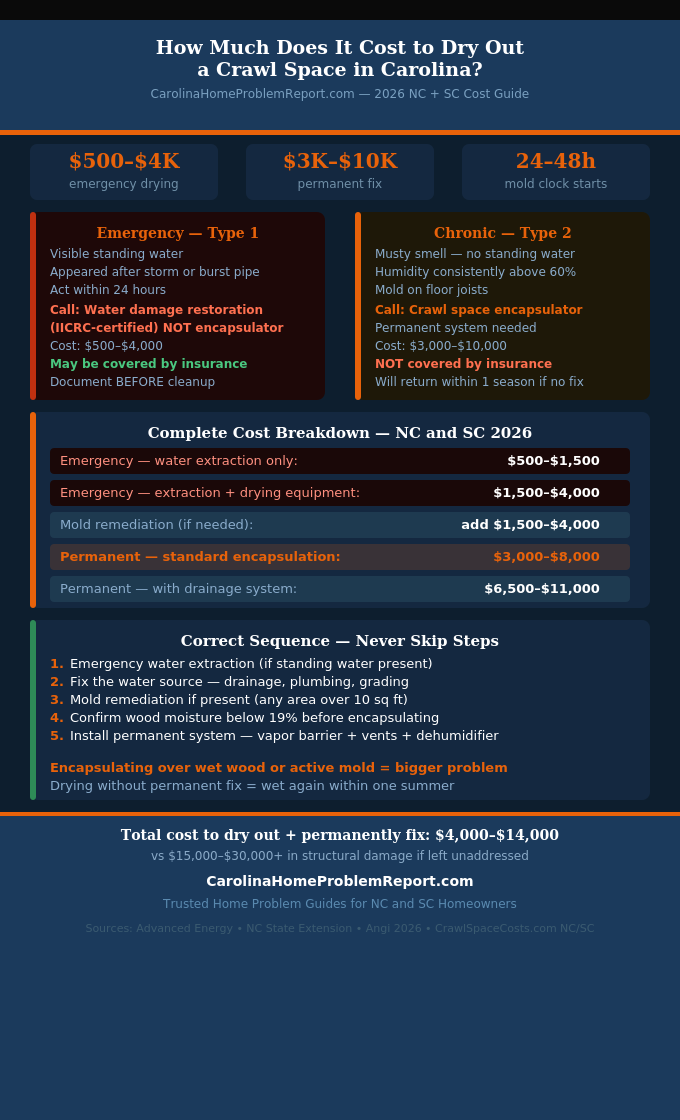
How much it costs to dry out a crawl space in North or South Carolina depends entirely on which drying problem you have. Emergency drying after flooding or a burst pipe costs $500–$4,000 for water extraction and professional drying equipment. Fixing chronic moisture — the ongoing humidity that Carolina crawl spaces accumulate over time — costs $3,000–$10,000 for a complete encapsulation system. Most homeowners pay for both at some point, but they are different services performed by different professionals at different times.
⭐ Key Takeaways
- ✓There are two completely different crawl space drying problems — emergency drying after a water event, and chronic moisture control. The costs and contractors involved are different for each.
- ✓Emergency drying after standing water costs $500–$4,000 depending on water volume and duration — call a water damage restoration company, not a crawl space encapsulation contractor
- ✓Chronic moisture control — the permanent fix — costs $3,000–$10,000 in the NC and SC market for a complete encapsulation system
- ✓Homeowners insurance may cover emergency drying if caused by a sudden accidental water event — document everything before any work begins
- ✓Doing the drying without fixing the moisture source is money wasted — it will be wet again within one season without permanent moisture control
How much does it cost to dry out a crawl space? It is one of the most searched questions Carolina homeowners ask — usually right after discovering something alarming: standing water after a storm, a musty smell that has been building for months, or a home inspector's report that mentions crawl space moisture. The answer most people get is vague and unhelpful. This guide gives you the real numbers.
The reason costs vary so dramatically is that "drying out a crawl space" describes two fundamentally different problems. The first is an emergency — standing water from flooding, a burst pipe, or storm intrusion. This requires immediate water extraction and temporary drying equipment to prevent mold from establishing within the first 24–48 hours. The second is chronic — the persistent above-60% humidity that Carolina crawl spaces accumulate from ground evaporation, outdoor air through foundation vents, and seasonal moisture cycles. This requires a permanent encapsulation system, not temporary drying equipment.
Confusing these two problems — or hiring the wrong type of contractor for each — is where most Carolina homeowners waste money on crawl space drying. According to Advanced Energy's North Carolina crawl space research, 70–90% of older Southeast homes already have moisture-damaged insulation or mold present when first professionally inspected — meaning the chronic moisture problem had been building long before any emergency event was ever noticed. This guide separates both problems clearly and gives you the accurate 2026 cost numbers for each.
In This Article
- Two Crawl Space Drying Problems — Which One Do You Have?
- Emergency Drying Costs — Standing Water and Water Events
- Chronic Moisture Control Costs — The Permanent Fix
- What Drives the Final Cost Up in Carolina
- Does Homeowners Insurance Cover Crawl Space Drying?
- The Correct Sequence — Emergency Drying Then Permanent Fix
- Frequently Asked Questions
Two Crawl Space Drying Problems — Which One Do You Have?
Before you can understand what drying out your crawl space will cost, you need to identify which type of moisture problem you are dealing with. The signs are different and the solutions are different.
Many Carolina homeowners have both simultaneously
A crawl space with chronic high humidity is more likely to flood and harder to dry out after a water event because the wood and soil are already saturated. And a crawl space that flooded after a storm but was never properly dried and encapsulated will develop chronic moisture problems within the following season. The emergency drying and the permanent encapsulation are two separate jobs — but in Carolina homes they are frequently both needed, sequenced in the correct order.
Emergency Drying Costs — Standing Water and Water Events
If you have standing water in your crawl space, the clock is running. Here are the costs involved in emergency water extraction and drying in the NC and SC market:
| Service | Cost Range | What It Includes |
|---|---|---|
| Water extraction only | $500–$1,500 | Pump truck or wet/dry vacuum removal of standing water. Small to moderate water volumes. Emergency response. |
| Water extraction + drying equipment | $1,500–$4,000 | Water removal plus industrial dehumidifiers and air movers placed in the crawl space for 3–5 days to bring wood moisture content down. Most common emergency drying scope. |
| Mold remediation added | Add $1,500–$4,000 | If water event was not addressed within 48 hours or if pre-existing mold is found during the emergency response. HEPA vacuum, antimicrobial treatment, and damaged material removal. |
| Structural assessment | $150–$400 | Inspection of floor joists, sill plates, and subfloor after drying completes. Confirms whether structural repair is needed before encapsulation proceeds. |
| Old insulation removal and disposal | $500–$2,000 | Wet insulation must be removed before drying equipment can work effectively and before encapsulation can proceed. Wet fiberglass batts hold moisture and prevent proper drying. |
⏲ How long does emergency crawl space drying take?
Typically 3–7 days for the equipment to bring wood moisture content below 19%. The restoration company will use moisture meters to track drying progress and confirm when equipment can be removed. Rushing this step — removing equipment before the wood is adequately dry — leaves residual moisture that quickly supports mold growth. The drying phase is complete when moisture readings are consistently below 19% in multiple joist locations, not just when the visible water is gone.
Chronic Moisture Control Costs — The Permanent Fix
Once any emergency water event is resolved and the crawl space is dry, the permanent moisture control system is what prevents the problem from returning. In Carolina's climate, a crawl space that is dried out but not encapsulated will return to elevated humidity within one summer season. According to NC State Extension's Healthy Homes program, proper moisture control is one of the most important long-term investments a Carolina homeowner can make for both structural integrity and indoor air quality.
| Permanent Fix Component | NC Cost Range | SC Cost Range |
|---|---|---|
| Vapor barrier only (no vent sealing) | $1,500–$4,000 | $1,200–$3,800 |
| Standard complete encapsulation | $5,000–$8,000 | $4,800–$7,500 |
| With drainage system added | $6,500–$11,000 | $6,000–$10,500 |
| Dehumidifier only (existing encapsulation) | $1,000–$2,500 | $1,000–$2,500 |

What Drives the Final Cost Up in Carolina
How long the moisture problem has been present
A crawl space that has had chronic moisture for 3–5 seasons will almost always have mold on wood surfaces and may have structurally compromised joists from wood rot. Mold remediation ($1,500–$4,000) and joist sistering ($100–$300 per joist) must happen before encapsulation. A crawl space caught early costs significantly less to fix permanently.
Location within the Carolinas
Eastern NC and coastal SC have the highest moisture pressure — shallow water tables, the highest sustained summer humidity in the state, and frequent storm-related water intrusion. These locations typically require drainage systems in addition to encapsulation. The SC Lowcountry adds coastal storm risk and often FEMA flood zone considerations. Inland Piedmont markets price closest to state averages.
Crawl space access and clearance
Low clearance spaces — under 24 inches — significantly increase labour time and cost. Difficult access points (a hatch in a closet rather than exterior access) add time. Both emergency drying and permanent encapsulation cost 15–25% more in low clearance or difficult-access crawl spaces.
Whether a drainage system is needed
Homes with groundwater intrusion — where water enters through the foundation walls or floor rather than just from ground evaporation and outdoor air — need an interior perimeter drainage channel and sump pump before encapsulation. This adds $1,500–$3,000 but is not optional for these sites. An encapsulation installed over a groundwater intrusion problem will fail when water comes in under the barrier.
Time of year and contractor availability
Fall and winter scheduling (September–February) typically gets better contractor availability and in some cases modest discounts — 10–15% off peak summer pricing in the SC coastal market. Emergency water extraction has no off-season discount — you pay market rate for 24-hour emergency response whenever the event occurs.
Does Homeowners Insurance Cover Crawl Space Drying?
This question has a nuanced answer that determines whether you pay out of pocket or make a claim first.
✅ Likely covered — sudden accidental water events:
- Burst pipe that flooded the crawl space — if the burst was sudden and accidental
- HVAC condensate line failure that flooded the space
- Appliance malfunction causing water intrusion
- Sudden accidental overflow from a plumbing fixture
✕ Typically not covered — maintenance and gradual issues:
- Chronic moisture, ground evaporation, and humidity — considered maintenance
- Flooding from surface water, storm drainage, or rising water table — typically excluded under standard policies (requires separate flood insurance)
- Gradual water seepage through foundation cracks
- Mold resulting from long-term moisture rather than a sudden event
- Encapsulation system installation — considered home improvement, not damage repair
⚠️ Document before cleanup — every time
Before any water extraction work begins, photograph and video every visible water source, every wet surface, and the full extent of damage from multiple angles. Contact your insurer before work starts to preserve any potential claim. Restoration companies experienced with insurance claims (most IICRC-certified companies in NC and SC deal with insurance regularly) can assist with documentation and direct billing to your insurer.
The Correct Sequence — Emergency Drying Then Permanent Fix
Whether your crawl space has standing water, chronic moisture, or both — the sequence below is non-negotiable. Steps done out of order create bigger problems:
Emergency water extraction (if standing water present)
Call an IICRC-certified water damage restoration company within hours of discovery. They remove standing water with extraction equipment, set industrial dehumidifiers and air movers, and monitor wood moisture levels until the space is dry. Document for insurance before cleanup begins. Cost: $500–$4,000 depending on scope.
Fix the water source
No permanent fix works until the source of moisture entry is addressed. This means fixing plumbing leaks, improving exterior drainage, addressing foundation cracks, or installing drainage systems for groundwater intrusion. This step must happen before encapsulation.
Mold remediation (if mold is present)
Any mold on wood surfaces must be professionally remediated before encapsulation seals the space. Encapsulating over active mold traps it inside a controlled environment and accelerates structural damage. Cost: $1,500–$4,000 depending on extent.
Confirm wood moisture below 19%
Use a wood moisture meter to confirm floor joists are below 19% before any encapsulation work begins. Encapsulating wet wood traps moisture inside the sealed environment. Allow the space to air dry naturally or with temporary dehumidification until readings confirm it is safe to proceed.
Install the permanent encapsulation system
Vapor barrier, sealed vents, dehumidifier — the complete three-component system that maintains below 60% RH year-round and prevents moisture from ever becoming a problem again. This is the investment that converts a recurring expense into a one-time permanent solution. Cost: $3,000–$10,000 depending on scope and location in NC or SC.
Frequently Asked Questions
How much does it cost to dry out a crawl space in North Carolina?
Emergency drying after standing water costs $500–$4,000 in NC depending on water volume, duration, and whether mold remediation is needed. The permanent fix — complete encapsulation to prevent moisture from returning — costs $3,000–$10,000 for most NC homes, with the NC average around $5,100 for standard scope. In Eastern NC where water tables are shallow and humidity pressure is highest, drainage systems are often needed, pushing total costs toward $8,000–$13,500 for comprehensive projects.
How long does it take to dry out a crawl space?
Emergency drying with professional equipment typically takes 3–7 days to bring wood moisture content below 19%. Larger water volumes or crawl spaces where water sat for more than 24 hours before treatment take longer. Natural air drying without equipment is not an option in a Carolina summer — the outdoor humidity is too high to allow the crawl space to dry on its own, and mold will establish before the wood dries.
Can I dry out a crawl space myself?
For minor amounts of standing water — a few inches in a small area — a submersible pump and a consumer-grade dehumidifier can handle removal. For any significant water event, professional equipment is needed because the volume and rate of extraction required exceeds what consumer products can deliver. More importantly, professional restoration technicians use moisture meters to confirm the space is adequately dry before mold risk is eliminated — a step that consumers often skip, leaving residual moisture that produces mold within the following weeks.
What is the difference between drying out and encapsulating a crawl space?
Drying out removes existing moisture — it is a remediation action performed after a water event or to prepare for permanent work. Encapsulation is the permanent system that prevents moisture from returning — it is an installation project that creates a sealed, dehumidified environment. Drying without encapsulation is temporary. Encapsulation before drying is counterproductive. They must happen in sequence.
How do I know if my crawl space needs emergency drying or encapsulation?
If you have visible standing water — call a water damage restoration company immediately. If you have no standing water but have a musty smell, elevated humidity readings, or visible mold on floor joists — call a crawl space encapsulation contractor for an assessment. If you have both — the restoration company handles the emergency drying first, then the encapsulation contractor handles the permanent solution. Many homeowners benefit from scheduling both types of assessments at the same time to understand the full scope and cost before emergency response costs are sunk.
💡 Budgeting for the Permanent Fix?
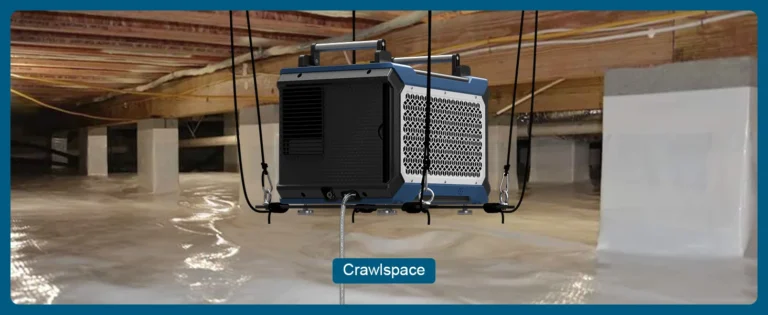
The dehumidifier is usually the single line item homeowners can price and buy themselves before calling a contractor for the rest. Argendon's range covers every crawl space size from $373–$719. Use code CHPR3 for an extra 3% off.
Shop Argendon Dehumidifiers → Code CHPR3 saves 3% at checkout- Crawl space drying in Carolina is two separate problems with two separate price tags — emergency water extraction ($500–$4,000) and permanent moisture control ($3,000–$10,000). Confusing the two, or hiring the wrong contractor for each, is the most common way homeowners overpay.
- Standing water requires an IICRC-certified restoration company within 24 hours — not an encapsulation contractor. Mold begins colonising wet wood within 24–48 hours of a water event.
- Homeowners insurance typically covers sudden accidental events (a burst pipe, an appliance failure) but not chronic humidity, gradual seepage, or encapsulation as a home improvement — document everything before cleanup begins to preserve any claim.
- A crawl space that is dried but never encapsulated returns to elevated humidity within one Carolina summer season — the drying cost is wasted money without the permanent system behind it.
- The dehumidifier is the one component of a full encapsulation budget most homeowners can price and purchase themselves before calling a contractor — typically $373–$719 for a commercial-grade crawl space unit, versus $1,000–$2,500 when bundled into a contractor's installed price.
The Carolina Home Problem Report editorial team researches and writes guides for homeowners across North and South Carolina. Our research draws on Advanced Energy field studies, NC State Extension Healthy Homes publications, Angi and HomeGuide cost data, CrawlSpaceCosts.com regional pricing, and insights from licensed Carolina contractors. We are not contractors — we are a research team dedicated to giving Carolina homeowners clear, locally specific, unbiased answers.
📚 Key Concepts — Reference Sources
- Dehumidifier (Wikipedia) — how mechanical dehumidification works and why it is the active component that maintains a dried crawl space long-term
- Relative Humidity (Wikipedia) — the 60% RH threshold referenced throughout this cost guide as the trigger point for chronic moisture problems
- Mold (Wikipedia) — why mold establishes within 24–48 hours of a water event and why remediation must happen before encapsulation seals the space
Carolina Home Problem Report is an informational resource for homeowners. We are not licensed contractors. Always consult a qualified professional before making home repair decisions. Cost ranges are market estimates and may vary. See our Disclaimer and Affiliate Disclosure.