Crawl Space Moisture and Allergies — How NC SC Crawl Space Mold and Humidity Trigger Allergy and Asthma Symptoms
⚡ QUICK ANSWERA damp crawl space produces mold spores, dust mites, and mycotoxins that enter your living space via the stack effect. In NC and SC homes, 40–50% of the air you breathe originates in the crawl space. Encapsulation reduces crawl space humidity below 60% RH, which stops mold growth and dramatically reduces the allergen load entering the home. Most allergy sufferers report noticeable improvement within 30–60 days of encapsulation.
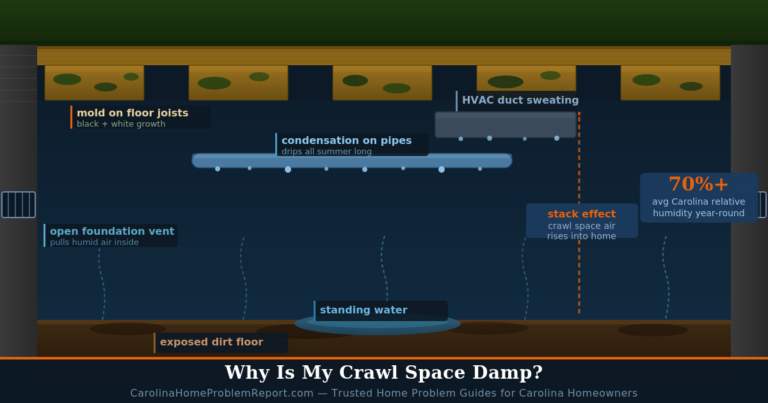
Crawl space moisture and allergies have a direct and well-documented connection that most Carolina homeowners do not fully understand until symptoms are already affecting their household. When a crawl space runs at high humidity — above 60% relative humidity, which is common across NC and SC year-round — it creates the exact conditions mold spores need to multiply. Those spores enter your living space continuously through the stack effect, where air rises through the home and pulls replacement air up from below.
How a Wet Crawl Space Triggers Allergies
The connection between crawl space moisture and allergies works through three primary pathways — mold spores, dust mites, and mycotoxins — all of which are produced or enabled by high humidity conditions below the floor.
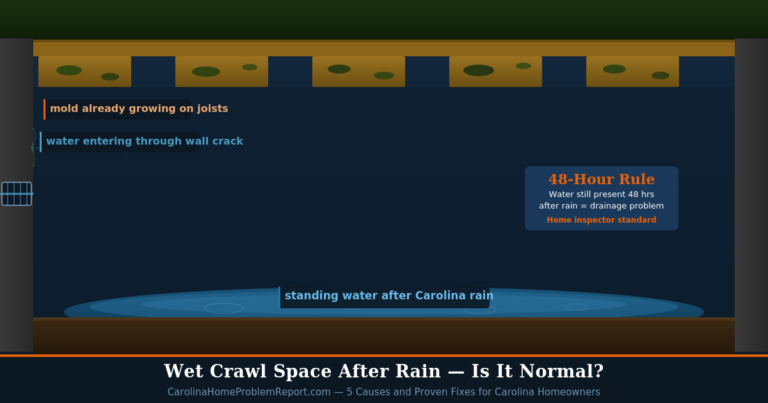
Mold spores. Mold begins growing on wood surfaces in a crawl space when moisture content exceeds 19% or when relative humidity remains above 60% consistently. In NC and SC, summer humidity regularly exceeds 80%, meaning unencapsulated crawl spaces are almost always in active mold growth conditions from April through October. Common mold species found in Carolina crawl spaces include Cladosporium, Penicillium, Aspergillus, and in advanced cases Stachybotrys chartarum (black mold). All produce spores that trigger allergic reactions in sensitive individuals.
Dust mites. Dust mites thrive at relative humidity above 50% and temperatures between 65–85°F — conditions that match a Carolina crawl space for much of the year. Dust mite droppings and body fragments are among the most potent indoor allergens and a leading trigger for asthma.
Mycotoxins. Some mold species produce mycotoxins — chemical compounds that remain active even after the mold that produced them is dead. Mycotoxins are smaller than spores and travel further through air currents. They have been linked to respiratory irritation, neurological symptoms, and chronic inflammation in sensitised individuals.
Symptoms That May Indicate a Crawl Space Allergy Problem
🔍 KEY DIAGNOSTIC SIGNAL: Symptoms that are consistently worse at home and improve when spending time elsewhere — at work, on holiday, staying with family — are strongly suggestive of an indoor air quality problem. A crawl space moisture inspection is an appropriate first step before pursuing allergy testing or medication adjustments.
The following symptoms may indicate crawl space-related allergen exposure:
- Persistent runny nose, sneezing, or nasal congestion — worse at home than away
- Itchy or watery eyes indoors
- Worsening asthma symptoms — particularly at night or in rooms closest to the crawl space
- Chronic fatigue or headaches that improve when spending time away from home
- Children in the household experiencing more frequent respiratory illness than peers
- Musty or damp smell in the home — particularly in rooms over the crawl space
The Stack Effect — Why Crawl Space Air Becomes Your Air
The stack effect is the primary mechanism by which crawl space conditions affect the air quality of the living space above. As warm air rises through the home and escapes through gaps at the top, it creates a negative pressure zone at the bottom of the house. That negative pressure draws replacement air upward from the lowest available source — the crawl space.
Building Science Corporation research estimates that 40–50% of the air in the ground floor of a crawl space home originates in the crawl space. In a home where the crawl space is at 80% relative humidity with active mold growth, that means nearly half the air on the ground floor has passed through a mold-laden environment before reaching the occupants. Sealing the crawl space to NC R409 standard brings relative humidity below 60% consistently, which stops new mold growth and reduces the allergen load entering the home from below by an estimated 60–80%.
Steps for NC and SC Homeowners with Crawl Space Allergy Concerns
Step 1 — Inspect the crawl space. Use our Crawl Space Inspection Checklist to assess humidity levels, visible mold, and moisture damage. Any reading above 60% RH confirms moisture conditions that support mold growth.
Step 2 — Address active mold before encapsulating. If mold is present on joists or subfloor surfaces, professional remediation must precede encapsulation. See Crawl Space Moisture and Mold for guidance.
Step 3 — Get encapsulation quotes. Use our Crawl Space Encapsulation Cost Guide to understand what the work should cost in your NC or SC market before calling contractors.
Step 4 — Verify the contractor licence. In NC check at nclbgc.org. In SC check at contractors.sc.gov.
Step 5 — Follow up with an allergist. Crawl space remediation removes an environmental trigger but does not treat existing allergic sensitisation. An allergist can assess whether allergy immunotherapy or other treatment is appropriate alongside the environmental remediation.
Related Guides
- Crawl Space Moisture and Mold
- What Causes Crawl Space Moisture?
- Crawl Space Encapsulation Cost Guide
- Crawl Space Inspection Checklist
- Humidity in Crawl Space
- Complete Crawl Space Guide — NC and SC
Carolina Home Problem Report provides general educational information for NC and SC homeowners. We are not licensed contractors or medical professionals. For allergy diagnosis and treatment consult a qualified allergist. For crawl space work verify contractor licences at nclbgc.org (NC) or contractors.sc.gov (SC). See our Disclaimer.