Crawl space encapsulation costs vary a lot depending on how big your crawl space is, how much vapor barrier and insulation it needs, and whether you add a drainage system. This free calculator gives you a personalized estimate in seconds, based on real contractor pricing data — not a generic one-size-fits-all number.
Quick Answer
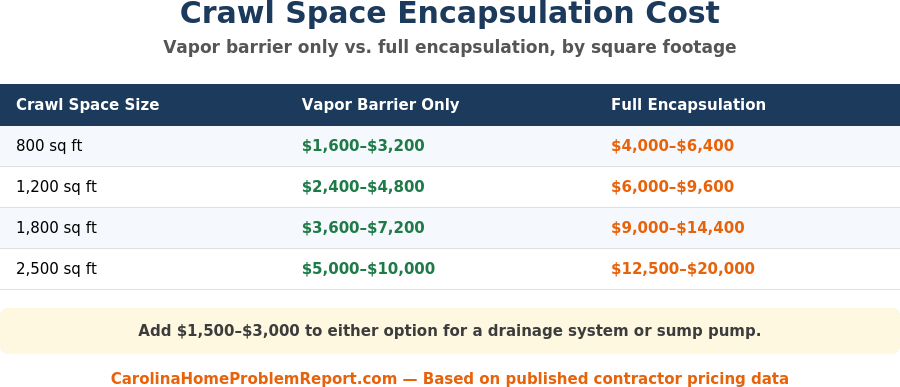
Crawl space encapsulation typically costs $2 to $4 per square foot for a vapor barrier alone, or $5 to $8 per square foot for full encapsulation with insulation and a dehumidifier. A drainage system or sump pump adds $1,500 to $3,000 to either option.
Enter your crawl space's square footage and package type below for a personalized price range.
Disclosure: this is a planning estimate based on published national and regional contractor pricing data, not a quote. Actual cost depends on your crawl space's condition, accessibility, and local labor rates. For an exact number, see our vetted local contractor directory.
How This Calculator Works
This estimator uses two pricing tiers pulled from published contractor cost data rather than a single blended average, because "encapsulation" means very different things depending on scope. A vapor barrier alone is a materials-and-labor job.
Full encapsulation adds wall insulation and a dedicated dehumidifier, which is why the price per square foot roughly doubles between the two options.
Vapor barrier only typically runs $2 to $4 per square foot installed. Full encapsulation, which includes insulation and a dehumidifier, typically runs $5 to $8 per square foot.
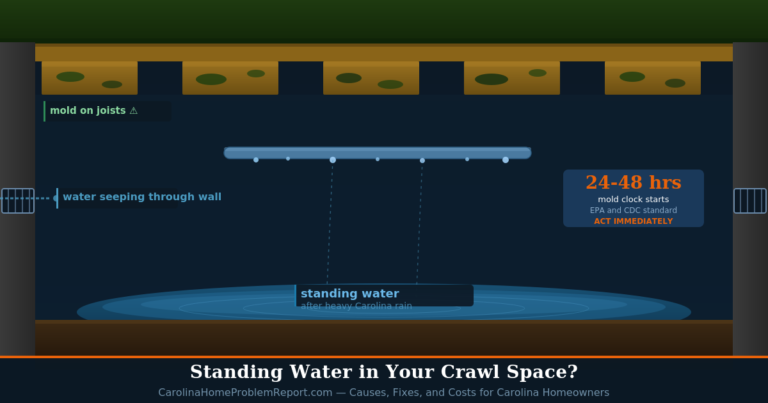
If your crawl space has standing water or a history of flooding, a drainage system or sump pump is usually recommended before encapsulation, which adds $1,500 to $3,000 to either option.
For crawl spaces larger than 3,000 square feet, per-square-foot pricing becomes less reliable because of fixed costs like equipment access and site prep that don't scale evenly, so this calculator recommends a custom quote instead of a single number at that size.
Why Vapor Barrier Only Isn't Always Enough
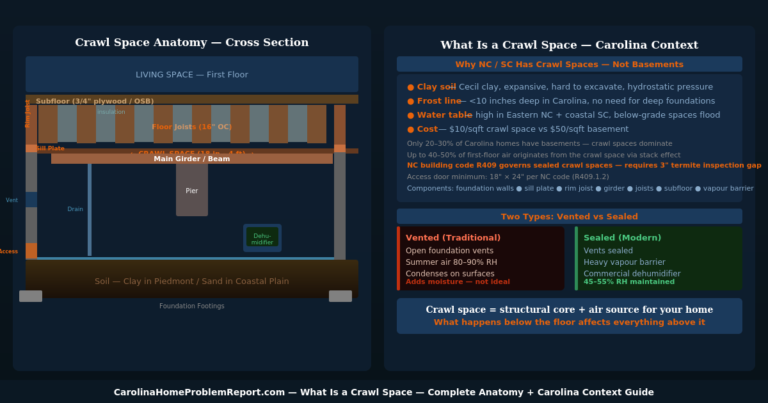
A vapor barrier stops moisture from rising out of the soil, which is a real improvement on its own. But in the Carolinas' humid climate, a lot of the moisture problem in a crawl space comes from outside air moving through foundation vents, not just the ground.
That's why a vapor barrier without a dehumidifier often still leaves the space humid enough for mold and wood rot to continue, even though the floor itself is drier.
If your main goal is protecting your home's structure and air quality long-term, full encapsulation is the more complete fix. If budget is the main constraint and you just need to stop visible ground moisture right now, vapor barrier only is a reasonable first step — just know it's a partial solution, not a final one.
What Affects Your Actual Price
Three things move your real number up or down from this estimate. Accessibility matters: a crawl space with 18 inches of clearance costs more to work in than one with 36 inches, because crews move slower and need more labor hours.
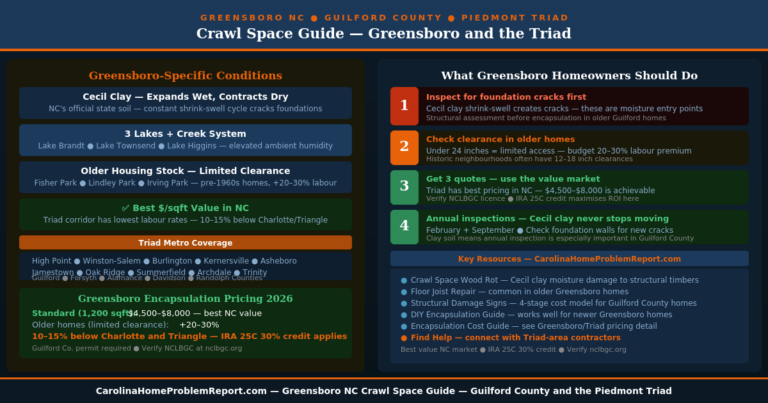
Current condition matters too: if there's existing mold, debris, or an old failed vapor barrier to remove first, that's an added line item most estimators don't account for. And local labor rates matter: contractors in larger metro areas like Charlotte or Raleigh typically charge more per hour than rural areas of the Carolinas.
None of these show up in a square-footage-only estimate, which is exactly why this tool gives you a planning range rather than a single number, and why the final step for any of these projects should be a few in-person quotes rather than booking off an online estimate alone.
Frequently Asked Questions
Does encapsulation increase my home's value?
It can, particularly in humid climates where buyers and inspectors specifically look for crawl space moisture issues. It's typically viewed as a maintenance/health investment rather than a value-adding renovation like a kitchen remodel, but it can remove a red flag that would otherwise come up in a home inspection.
Is a 6 mil vapor barrier enough, or do I need thicker?
6 mil is the minimum typically used, but most contractors in our directory recommend 12 to 20 mil for durability, since crawl spaces get foot traffic from future repairs and a thin barrier tears easily.
Thicker barrier costs more per square foot but usually isn't worth skipping for the modest savings.
Do I need a dehumidifier if I already have a vapor barrier?
In most of North and South Carolina's climate, yes. See our
crawl space dehumidifier size calculator to find the right capacity for your space once it's encapsulated.
For a full breakdown of total project costs including emergency water removal, mold remediation, and regional pricing differences, see our complete guide:
How Much Does It Cost to Dry Out a Crawl Space. And for everything else about crawl space problems in the Carolinas, start with our
Crawl Space NC SC Complete Guide.
Not sure which option is right for your situation, or want a few quotes to compare against this estimate? Our
vetted local contractor directory can connect you with crawl space specialists in North and South Carolina.